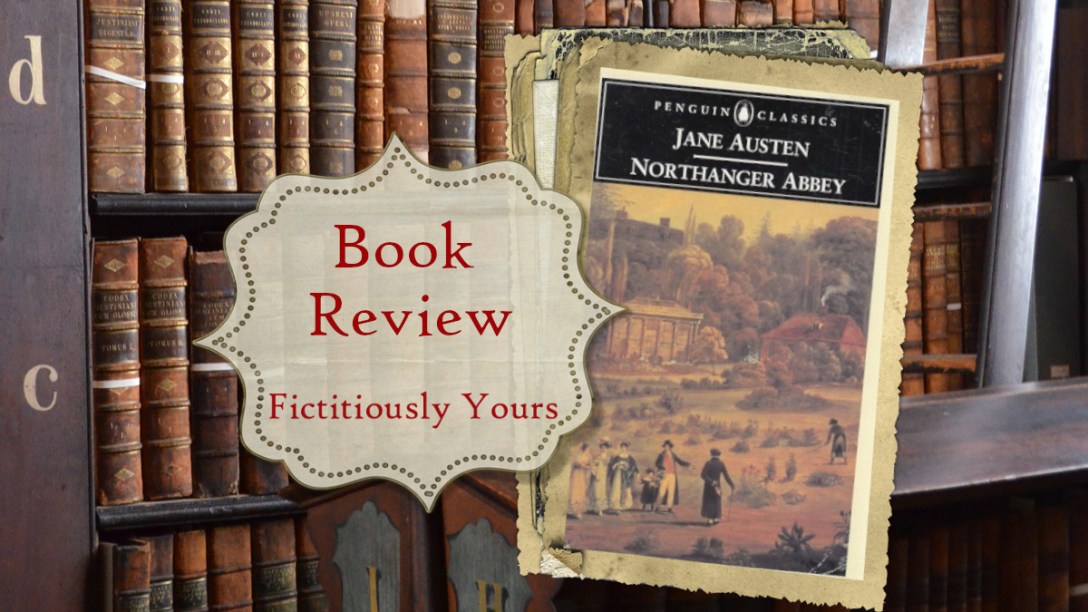
Northanger Abbey (completed 1803, published 1817) by Jane Austen
I’ve read Northanger Abbey at least four times, if not more. I recently re-read it with my book club after we finished The Mysteries of Udolpho, which is heavily referenced in Northanger Abbey.

It only gets better on re-read, I find. Due in no small part to the dashing character of Henry Tilney, the subtlety of the Tilney family’s dynamic in general, and the beautiful impressionability yet resilient honesty of Catherine Morland navigating a world full of follies: both social and architectural.
Catherine is introduced facetiously by the semi-present narrator of the story as the “heroine” of the tale, though unconventional: her mother not likely to die suddenly, being a hearty woman who had ten healthy children, and her father not likely to be a tyrant, being a good sort of country clergyman with a comfortable living. Fortunately, she is saved from this inauspicious start to her adventures by being requested to accompany a local older couple, the Allens, to Bath.
Though Mrs. Allen is also admittedly not destined to be Catherine’s bane by being a despotic or cruel guardian, she does prove to be somewhat useless as effective counsel or protection for Catherine, due to being empty-headed though well-meaning. Catherine soon meets a varied cast of characters in Bath, forming quick attachments and aversions that will be proven true or false upon testing.
Catherine’s adventures and experiences are as relatable as they are somewhat fanciful. Her acute social embarrassment in settings where she doesn’t know anyone is palpable, her rescue from this fate by a good-humored young man introducing himself and gently ridiculing the conventions of the setting in which they find themselves is the stuff of romantic comedies.
A key element within this novel is of course novel-reading and where exactly the line is between romantic fancies in books and dramatic realities of life. Catherine tries to apply novel logic and its extremes to reality and is repeatedly stymied by the unromantic, every-day facts. Her imagination, fed by tales of terror in her reading, leads her to make faux pas that range from humorous to insulting and threatens to overthrow her natural good sense.
Yet, she discovers a way to balance principles of novel representations of people’s characters to make insightful judgements about how similar traits might manifest in those around her–in a sense, she learns to be a close-reader of subtext when she started only able to see the surface representations of plot points and obvious villainy.
This is such a delightful and tightly woven novel, wryly poking fun at society as you would expect of Austen, while adding in an element of commentary on the popular culture of the day and its effects on “impressionable youth.”
While there are frequent mentions made to Udolpho particularly and other Gothic novels in passing, including The Monk and The Italian, it is completely unnecessary to have read any of them to enjoy the satire. Three of the four times I read Northanger, I hadn’t read Udolpho and it was already my favorite! Austen provides enough general context to follow the tropes and cliches being referenced, and many of them survive in movies and books today.
That said, those of the book club who read Udolpho first loved picking up the added layer of meaning when the references appeared in Northanger. It was also a great palate cleanser after Udolpho‘s long and heavy read! We were definitely not as speedy at reading it as Henry claimed to be…
The person, be it gentleman or lady, who has not pleasure in a good novel, must be intolerably stupid. I have read all Mrs Radcliffe’s works, and most of them with great pleasure. The Mysteries of Udolpho, when I had once begun it, I could not lay down again; I remember finishing it in two days–my hair standing on end the whole time.
-Henry Tilney in Northanger Abbey
It was a pleasure to read Northanger Abbey and not only get the whole context of the in-jokes, but also swoon over my favorite Austen hero! I found so much to enjoy again and I anticipate coming back to Northanger Abbey many more times.
 Fictitiously Yours
Wow, what a passion for JA and this title. I have only read it once and enjoyed it.
LikeLiked by 1 person